A few links to the tools and ingredients in this recipe are affiliate links, which may earn me a small commission at no extra cost to you.
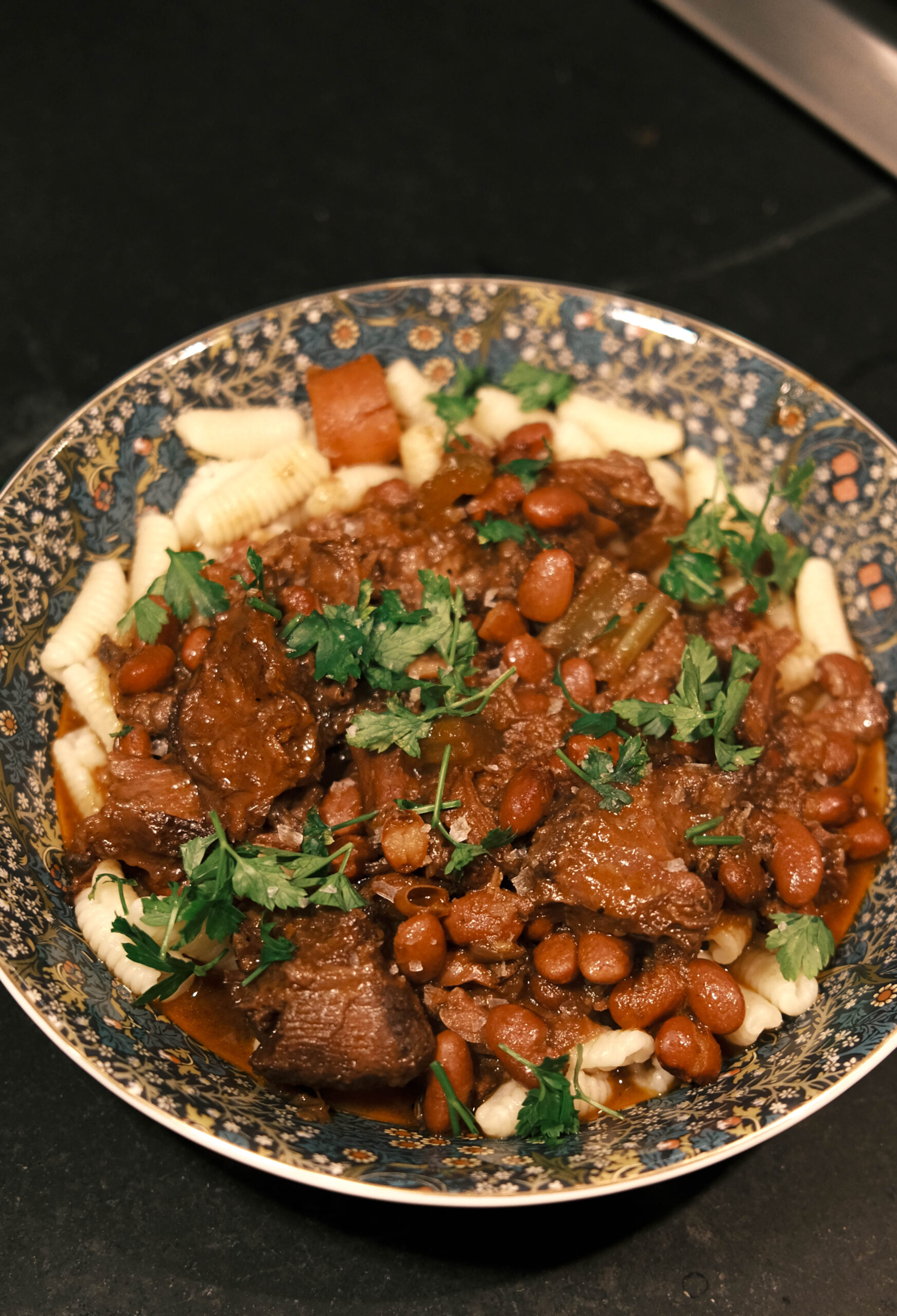
Red Wine-Braised Beef Shank and Beans is low-and-slow braise where beef shank, a whole bottle of red wine, and dried beans meld into something deeply rich and comforting. The beans cook right alongside the meat, absorbing all that wine-laced broth as everything breaks down together. Served over cavatelli or similar shaped pasta, it’s perfect for when the evenings are cold and you want something deeply satisfying.
Jump to:
About This Red Wine-Braised Beef Shank and Beans
There are a few cuts of meat I always keep in my deep freezer. The kind that sit there quietly until a cold evening shows up and I want to make something that feels like it took all day but really just needed time and a Dutch oven. Beef shank, cut osso buco-style, is one of them. It’s one of the most affordable cuts at the butcher counter, it’s incredibly forgiving, and it rewards you for your patience with meat that practically falls apart when you look at it.
This is a one-pot red wine-braised beef shank, and my move here is adding dried beans straight into the braising liquid. No soaking, no second pot. The beans go in raw and cook right alongside the meat for three hours, absorbing all that wine and broth and fond as they soften. It’s my little hack for stretching a single beef shank into a very full dinner — the beans become so creamy and saturated with flavor.
If you’ve ever wondered why recipes tell you to sear your meat before braising, this is where it matters. What’s actually happening is the Maillard reaction: proteins and sugars on the surface of the meat are transforming under high heat, creating new flavor compounds that didn’t exist before the sear. The same thing happens when you cook the tomato paste until it goes from bright red to brick — you’re concentrating the sugars and building a deeper, more complex base. And then there’s the wine. A whole bottle sounds like a lot, but the acid in the wine is doing real structural work here. In a low-and-slow braise, acid helps break down the collagen and connective tissue in the shank, which is what gives you that silky, falling-apart texture after three hours. Without enough acid, you’re relying on time alone, and the result is never quite as tender.
One more thing: the pasta shape matters. You want something with ridges, curves, or little pockets that catch the braising liquid. Cavatelli is perfect for this. Trofie would work too. What you don’t want is something smooth where the sauce just slides off. You’ll know the braise is done when the meat shreds with almost no resistance and the beans are creamy all the way through. And if you want to adapt this, short ribs work beautifully in place of the shank — but I keep coming back to the osso buco cut because the marrow melts out of the bone and into the broth, adding a richness you just can’t replicate with a boneless cut.
Why You’ll Love Red Wine-Braised Beef Shank and Beans
This is a true one-pot braise. Everything goes into the Dutch oven together and the oven does the rest. The dried beans cook right in the braising liquid, so there’s no soaking and no extra pot to wash. It feeds four people generously from a single beef shank, it tastes even better the next day, and it’s the kind of recipe that looks and tastes like you spent the whole afternoon cooking when the actual hands-on time is about twenty minutes.
Key ingredients
Beef shank, osso buco-style: This is a cross-cut from the leg with the bone and marrow still intact. It’s full of connective tissue, which means it needs time to break down but once it does, the collagen gives the braise that rich, almost sticky body. The marrow melts into the liquid as it cooks, adding another layer of depth you won’t get from a boneless cut. Look for a piece that’s about 2½ pounds.
Dry red wine (a full 750ml bottle): Use a simple table red. The wine provides the acid that helps tenderize the meat and it concentrates over three hours into the backbone of the broth.
Dried cranberry beans (or kidney beans): These go in dry, no soaking. Over three hours in that braising liquid, they turn creamy and rich, absorbing all the wine and beef flavor. They’re doing double duty here — stretching the dish and adding a substantial, almost velvety texture to each bowl. Cranberry beans are my preference for their creaminess, but kidney beans hold up well too.
Tomato paste: Two tablespoons, cooked until it turns from bright red to brick. This step is called pincé in French cooking. This “cooking out” process reduces the paste’s acidity and sweetness, creating a richer, more umami-driven base for sauces, stews, and braises.
Fennel seeds: A tablespoon of dried fennel seeds adds a subtle, almost sweet anise note that rounds out the richness of the braise. You’ll notice it in the background — it won’t taste like licorice, but it brings a warmth that complements the wine and beef beautifully.
The mirepoix — onion, celery, carrots: The classic aromatics. These cook down and dissolve into the broth over three hours, so don’t worry about cutting them absolutely perfectly. They’re building the flavor base.
Subscribe
Join The Community Garden
More than a newsletter, this is the deeper story behind the seasons. Think exclusive recipes, urban gardening tips, personal updates, and the slow-living inspiration I don’t share anywhere else. Join Carmen In The Garden on Substack and dig in.
Whole head of garlic, cut crosswise: The garlic softens completely in the braise and gets discarded at the end. It perfumes the whole pot without any sharpness.
Tips, Variations & Substitutions
Can I use a different cut of meat for beef shank? Yes — bone-in short ribs are the best substitute. They braise beautifully and have great flavor. You’ll lose the marrow element, but the result will still be rich and tender. Oxtail would also work, though it may need closer to 4 hours.
What wine should I use? Any dry red you’d drink. Pinot noir, cabernet, côtes du rhône, a blended table red — all work. Avoid anything sweet or labeled “cooking wine.” The wine is one of the main flavors in this dish, so use something decent.
Can I do this in a slow cooker? You can, but you’ll lose the Maillard reaction on the sear and the tomato paste if you skip the stovetop step. My recommendation: do the sear and build the base on the stove, then transfer everything to the slow cooker on low for 6-7 hours. I personally haven’t tried it in the slow cooker, so if you try it, let me know how it goes!
What if I can’t find cranberry beans? Kidney beans are the most accessible substitute. Pinto beans work too. Any medium-to-large dried bean that can hold up to a long braise will do the job.
Do I need to soak the beans? No. That’s the beauty of this method. The beans cook for 3 hours in an abundantly flavorful liquid, which is more than enough time to go from raw to creamy without a pre-soak.
Why cavatelli? You want a pasta shape with ridges or curves that can trap the braising liquid. Cavatelli, trofie, orecchiette, or even rigatoni would all work. Avoid long, smooth shapes like spaghetti or linguine.
Storage & Make-Ahead Notes
- Store the braised meat and beans in the broth in an airtight container in the fridge for up to 4 days.\
- Reheat gently on the stovetop over medium-low heat, adding a splash of broth or water if it needs to be loosened.
- Freeze the braise (without the pasta) for up to 3 months. Thaw overnight in the fridge and reheat on the stove.
- Always cook the pasta fresh when you’re ready to serve.
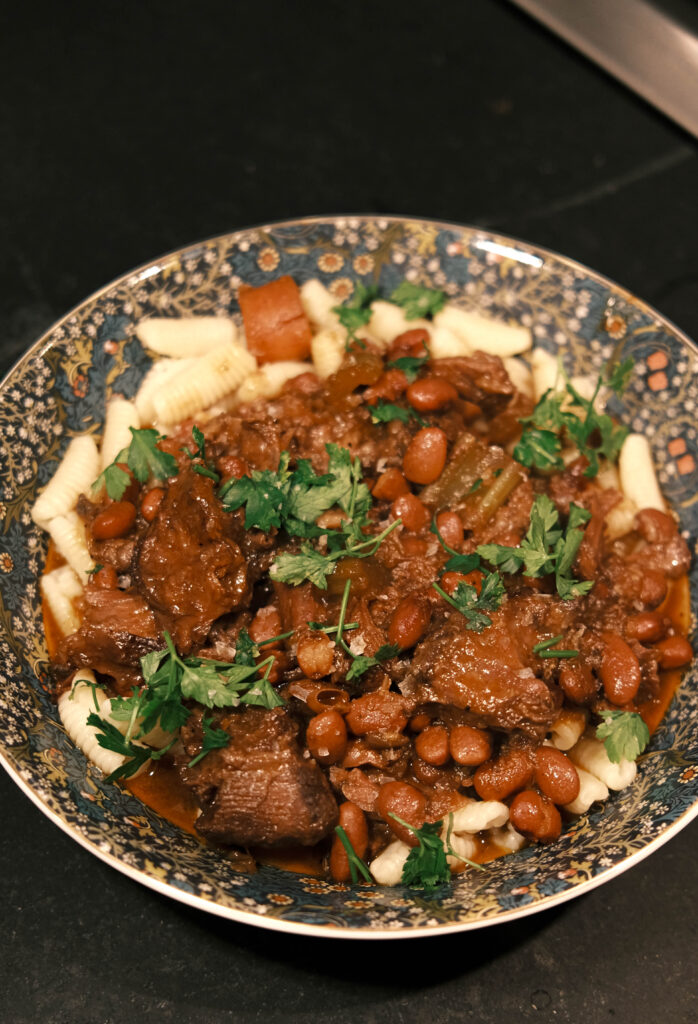
Red Wine-Braised Beef Shank and Beans
| Prep: 20m | Cook: 3h | Total: 3h 20m |
A whole bottle of red wine, a beef shank, and dried beans go into a Dutch oven and come out three hours later as the kind of deeply savory, falling-apart braise you’ll want to make when the weather is cold. The beans cook right alongside the meat — soaking up all that wine-dark broth until they’re creamy and rich.
Ingredients
For the braise:
- 1 beef shank, osso buco-style cut, bone-in (about 2–2½ pounds)
- Kosher salt and freshly cracked black pepper
- 2 tablespoons high-heat neutral oil (such as algae, avocado or grapeseed)
- 1 yellow onion, diced
- 2 stalks celery, diced
- 2 carrots, diced
- 1 whole head of garlic, cut crosswise
- 2 tablespoons tomato paste
- 4 cups low-sodium beef broth
- 1 bottle (750ml) dry red wine
- 1 tablespoon dried fennel seeds
- 2 dry bay leaves
- ½ pound dried cranberry beans or kidney beans
To serve:
- Cavatelli, cooked according to package directions
- Fresh flat-leaf parsley, roughly chopped
- Flaky sea salt
- Parmigiano-Reggiano, freshly grated
Instructions
- Preheat your oven to 325°F.
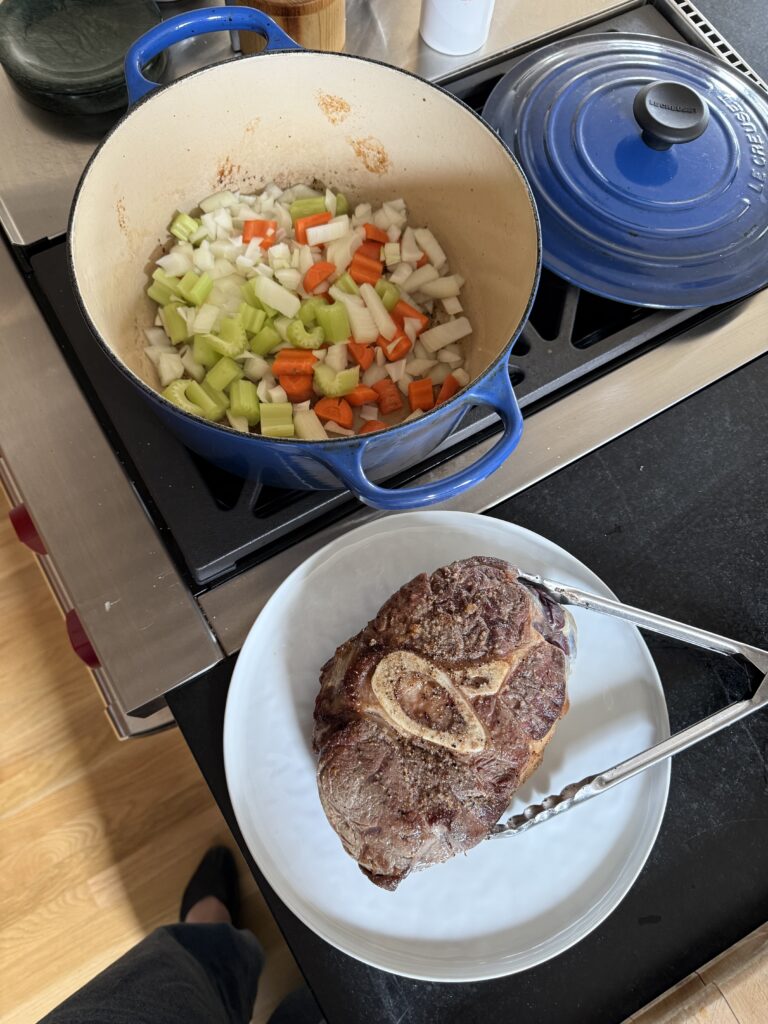
- Season the beef shank generously on all sides with kosher salt and black pepper.
- Sear the meat. Heat 2 tablespoons of neutral oil in a large Dutch oven over medium-high heat. Once the oil is shimmering, sear the beef shank on all sides until deeply browned. Remove and set aside.
- Build the base. In the same pot, add the onion, celery, and carrots. Cook until softened and starting to take on color, about 2-3 minutes. Add the halved garlic head and let it cook for a minute. Stir in the tomato paste and cook until it darkens to a brick red and starts to caramelize on the bottom of the pot — this is where a lot of your flavor lives.
- Deglaze and combine. Pour in the beef broth and the entire bottle of pinot noir, scraping up any fond from the bottom. Bring to a boil, then reduce to a simmer. Add the fennel seeds, bay leaves, dried cranberry beans, 1/2 a teaspoon of Kosher salt, and several grinds of black pepper. Give everything a good stir. Nestle the beef shank back into the pot.
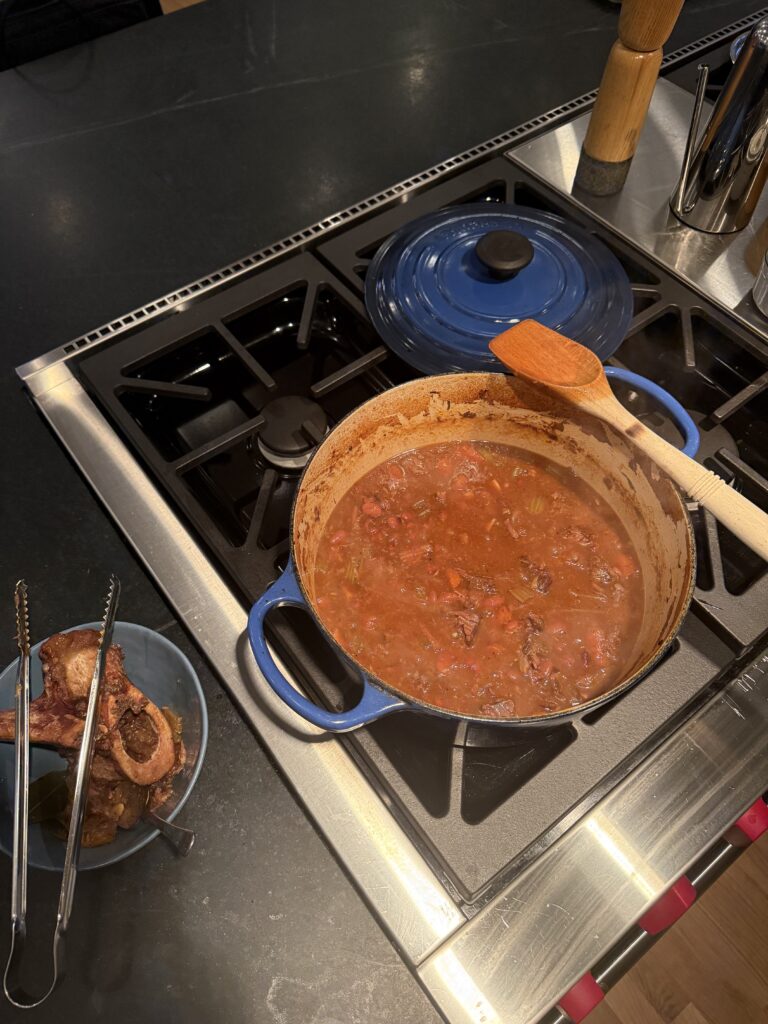
- Cover the Dutch oven and transfer to the oven. Cook for 3 hours undisturbed, until the meat is falling-apart tender and the beans easily cream with the back of the spoon.
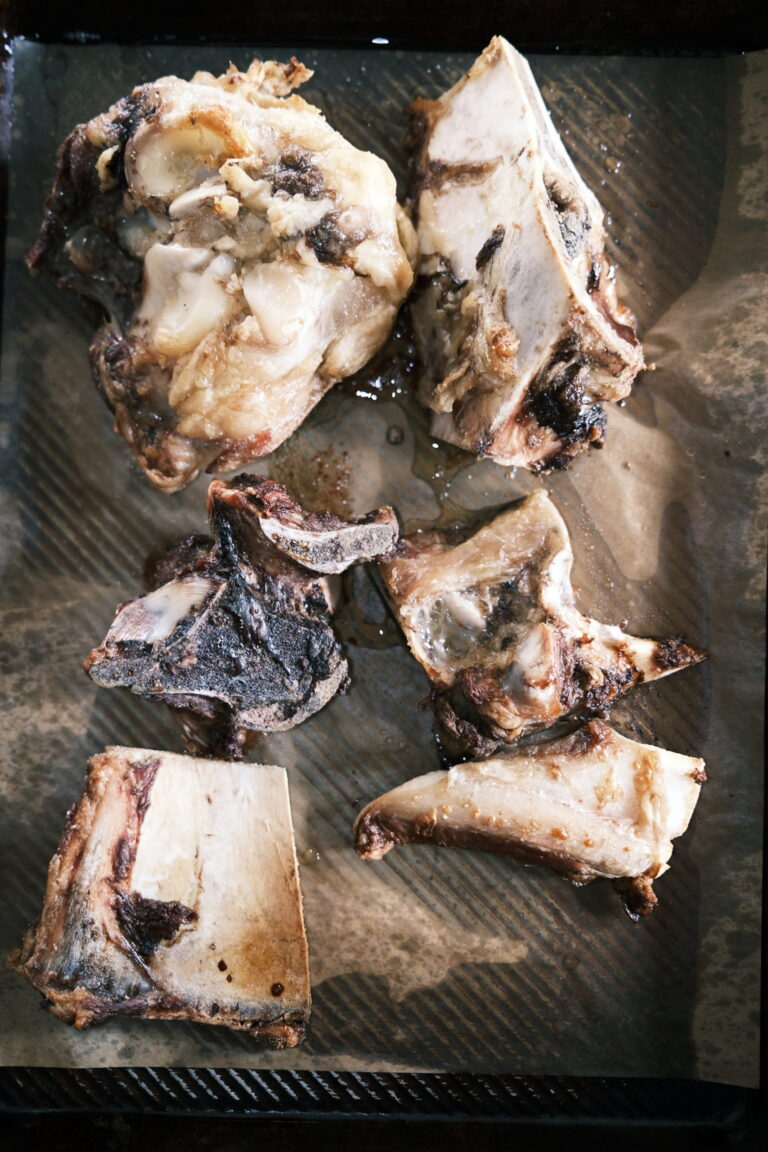
- Remove the pot from the oven. Using metal tongs and a fork pull the meat from the bone and shred the meat, discarding the bone. Remove and discard the bay leaves and the garlic head. Stir everything well.
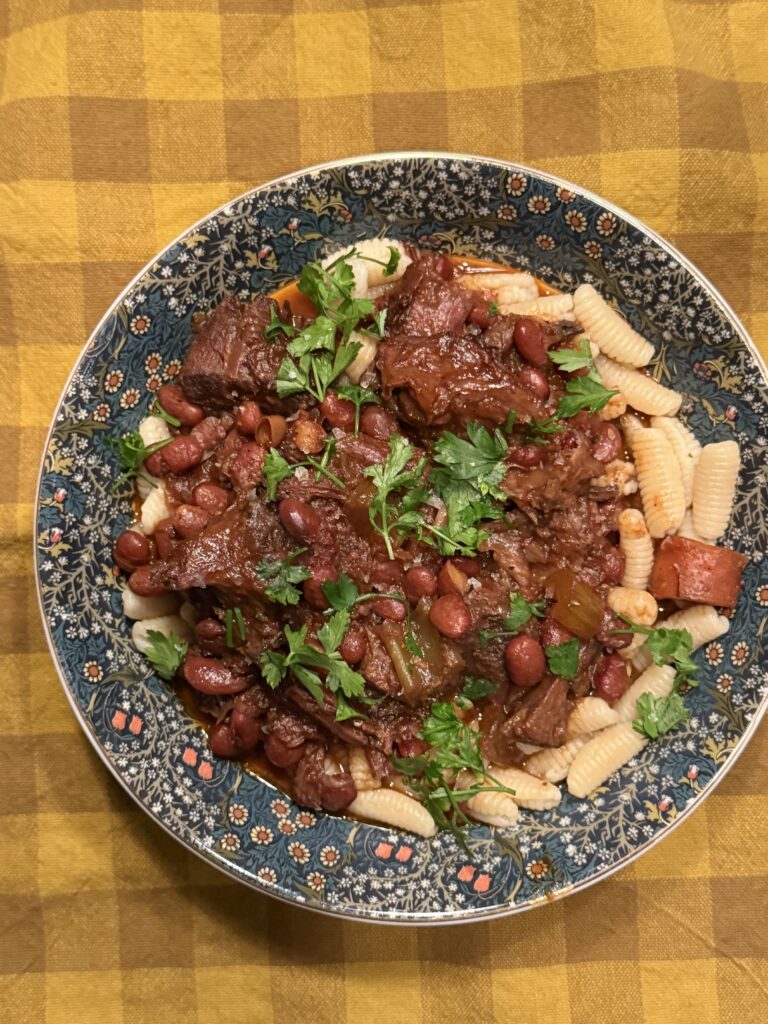
- Serve over cavatelli. Finish with a handful of fresh parsley, a shower of freshly grated Parmigiano-Reggiano, and a pinch of flaky sea salt.
Notes
Make ahead: This is even better the next day. Store the braised meat and beans in the broth and reheat gently. Cook the cavatelli fresh when you’re ready to serve.
Frequently Asked Questions
What is osso buco?
Osso buco literally means “bone with a hole” in Italian. It refers to a cross-cut section of the leg (shank) with the marrow bone still in the center. Traditionally it’s made with veal, but beef shank cut the same way is widely available, more affordable, and works beautifully in braises like this one. The marrow melts into the braising liquid as it cooks, enriching the broth.
Can you braise without wine?
You can, but the dish will taste different. The wine provides acid, which helps break down the connective tissue in the shank, and it adds a depth of flavor that broth alone can’t replicate. If you’d prefer not to use wine, increase the beef broth to 6 cups and add 1 14-ounce can of crushed tomato.
If you make this Red Wine-Braised Beef Shank and Beans, I’d love to hear how it turned out. Leave a rating below, tag me on Instagram @carmeninthegarden, or drop a comment with any questions.


Rate & Review