A few links to the tools and ingredients in this recipe are affiliate links, which may earn me a small commission at no extra cost to you.
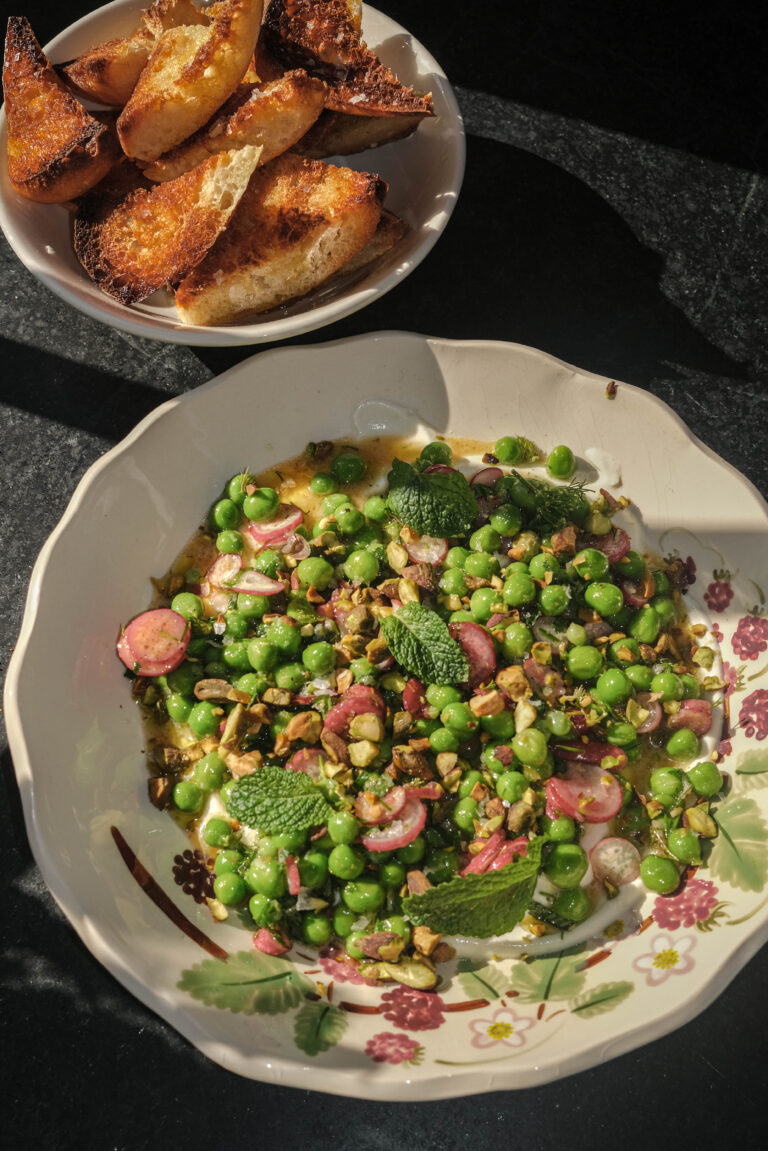
Bright, springy, and a little bit rustic — smashed peas and favas piled onto crispy toast with shaved parmesan and a drizzle of sticky balsamic reduction.
Jump to:
This is the kind of thing I make when the first peas and fava beans show up at the farmers market and I can’t wait another minute to eat them. It’s barely a recipe — more of an assembly — but the combination of sweet, grassy peas and favas on crunchy toast with salty parmesan and tangy balsamic is one of those combinations that hits way above its weight. It takes maybe twenty minutes from start to finish, and most of that’s waiting for the balsamic to reduce.

The mortar and pestle makes all the difference
You could use a fork or a food processor, but I really want you to use a mortar and pestle here. Smashing the peas and favas by hand gives you the perfect texture — some pieces break down into a creamy, spreadable base while others stay chunky and whole. That contrast is what makes this feel interesting on the toast instead of just being green mush. The basil and green onions get pounded in too, releasing their oils and perfuming the whole mixture. It smells like spring in a bowl.
Subscribe
Join The Community Garden
More than a newsletter, this is the deeper story behind the seasons. Think exclusive recipes, urban gardening tips, personal updates, and the slow-living inspiration I don’t share anywhere else. Join Carmen In The Garden on Substack and dig in.
Good bread is non-negotiable
This recipe lives or dies by your bread. You want a sturdy, crusty baguette or country loaf that can hold up under the weight of the smash without going soggy. Slice it about an inch to an inch and a half thick, brush both sides lightly with olive oil, and toast until deeply golden and crisp all the way through. If you have a toaster oven, use it — it gives you more control than a broiler. The toast should be firm enough to snap when you break it, not bend.
Do not rush the balsamic
The balsamic reduction is what ties everything together. You are cooking about a quarter cup of balsamic vinegar down on low heat until it turns thick, syrupy, and sweet. It should coat the back of a spoon and drizzle in a thin, glossy stream. This takes around ten to fifteen minutes, and the key is patience — if you crank the heat to speed it up, it will burn and taste bitter. Once it’s done, you’ll have about two tablespoons of sticky, concentrated balsamic that makes every bite sing. Let it cool slightly before drizzling — it thickens even more as it sits.
Make it a meal. Add a fried egg on top for breakfast or brunch, or serve alongside a simple arugula salad with lemon vinaigrette for a light dinner. A dollop of ricotta or burrata on each toast turns this into something you could serve to company without thinking twice.

Smashed peas and favas w/ basil, green onions, parmesan, reduced balsamic
| Prep: 10m | Cook: 15m | Total: 25m |
A spring celebration on toast — sweet peas and fava beans smashed with basil and green onions, piled onto crispy olive oil toasts, finished with shaved parmesan and a sticky balsamic reduction. Simple, fresh, and ready in twenty minutes.
Ingredients
For the toasts:
- 1 baguette, sliced 1 to 1½ inches thick (about 8 slices)
- 2 tablespoons extra virgin olive oil, for brushing
- Flaky sea salt
For the smash:
- 1 cup fresh peas, shelled and blanched
- 1 cup fresh fava beans, shelled and blanched
- 1 small handful fresh basil leaves, roughly torn
- 2 green onions, finely sliced
- 1 tablespoon extra virgin olive oil
- ½ teaspoon kosher salt, plus more to taste
- Freshly cracked black pepper
For finishing:
- ¼ cup balsamic vinegar (for reducing)
- A block of parmesan, for shaving
Instructions
Make the balsamic reduction:
- Pour the ¼ cup balsamic vinegar into a small saucepan over low heat. Let it simmer gently — you want tiny, lazy bubbles, not a rolling boil. Cook for 10 to 15 minutes, swirling the pan occasionally, until the vinegar has reduced by about half and coats the back of a spoon in a thin, glossy layer. It should smell sweet and concentrated, not sharp. Remove from heat and set aside — it will thicken further as it cools.
Toast the bread:
- Slice the baguette into 1 to 1½ inch thick rounds. Brush both sides lightly with olive oil and arrange on a baking sheet. Toast in a toaster oven or under the broiler until deeply golden and crisp all the way through, about 3 to 4 minutes per side. The bread should feel firm and snap when you break it, not bend. Sprinkle each toast lightly with flaky sea salt while still warm.
Smash the peas and favas:
- Add the blanched peas and fava beans to a mortar and pestle along with the torn basil, sliced green onions, 1 tablespoon of olive oil, salt, and pepper. Pound and smash until you have a rough, chunky mixture — some pieces should be creamy and broken down while others stay whole and pop between your teeth. Taste and adjust the salt. The mixture should taste bright, grassy, and just a little sweet.
Assemble:
- Spoon a generous mound of the pea and fava smash onto each toast, pressing it gently into the bread. Using a vegetable peeler, shave wide curls of parmesan over the top. Drizzle each toast with the balsamic reduction — it should fall in a thin, sticky stream. Finish with a crack of black pepper and serve immediately while the toast is still crisp.
Notes
- Blanching peas and favas. Bring a pot of salted water to a boil. Drop in the shelled peas and favas for 60 to 90 seconds, then transfer to an ice bath. For favas, slip off the outer skins after blanching — you want the bright green bean inside.
- No mortar and pestle? Use the back of a fork to smash everything in a bowl. A food processor works too, but pulse carefully — you want chunky, not smooth.
- Frozen peas work. If fresh peas and favas are not in season, use thawed frozen peas and skip the blanching. It will not be quite the same, but it is still delicious.



Rate & Review