A few links to the tools and ingredients in this recipe are affiliate links, which may earn me a small commission at no extra cost to you.
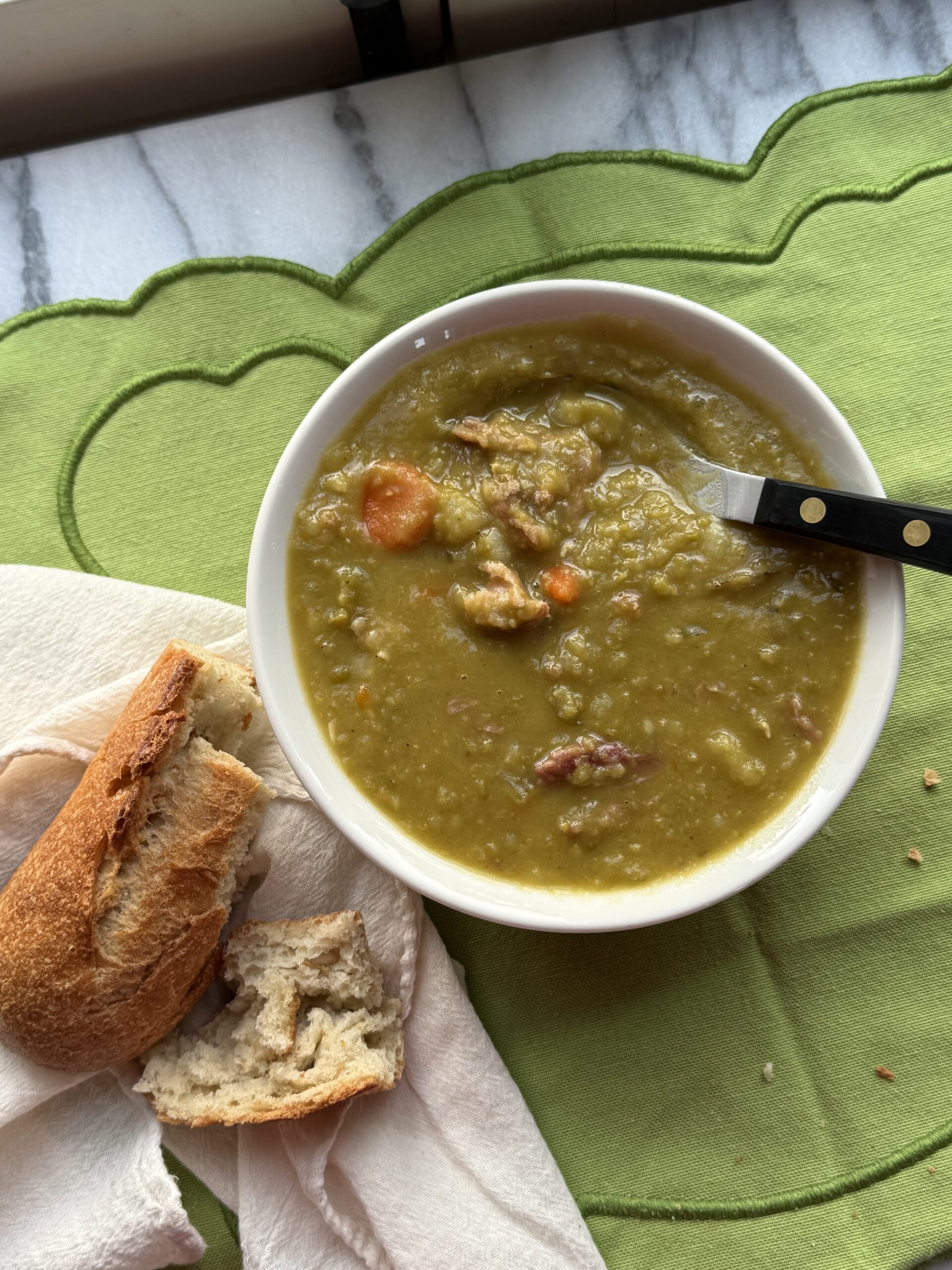
There’s a particular satisfaction in pulling a ham bone out of the fridge the day after a holiday and knowing exactly what it’s becoming. This split pea soup is that knowing. It’s the recipe that turns a bone most people throw away into the best meal of the week.
Jump to:
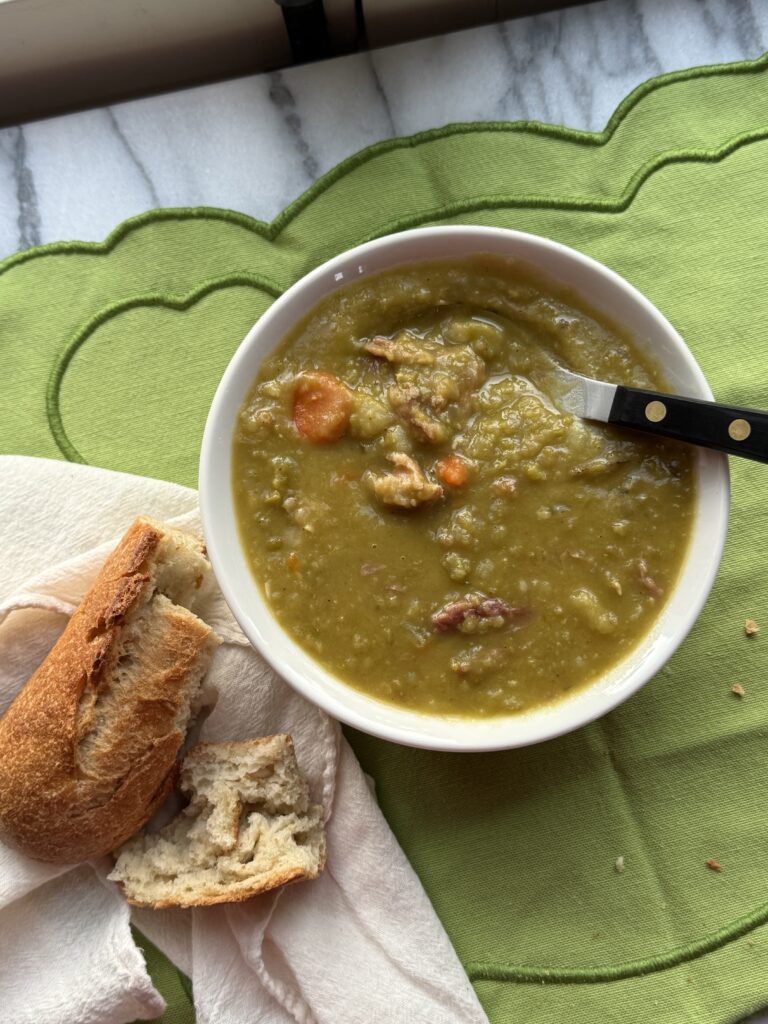
I’ve made this more times than I can count, always after Easter or Christmas, always with a bone that still has some good shreds of meat clinging to it. The dry split peas break down completely, the potato quietly dissolves into the base (that’s on purpose, more on that below), and the whole soup turns into something thick and velvety with a deep, smoky backbone.
This is not a delicate soup. It’s hearty and served with a torn hunk of bread, and it’s even better the next day! One pot. One bone. A pound of peas. A couple of hours of mostly hands-off simmering. This is as good as leftover cooking gets.
What Makes This Work
The ham bone does the heavy lifting. You’re not building flavor from scratch here. The bone releases collagen, smoke, and salt into the broth over the long simmer, creating a depth that no amount of seasoning could replicate. This is the whole reason the recipe exists.
A russet potato disappears into the soup. You won’t find potato pieces in the finished bowl. The russet breaks down during the simmer and adds body and a silky quality to the base, working alongside the split peas to create that signature thickness without any cream or thickener.
Apple cider vinegar is the secret finish. A single teaspoon, stirred in at the very end, brightens the entire pot. It pulls the smoky, savory flavors forward and keeps the soup from tasting one-note. You won’t taste vinegar, just a soup that feels more alive.
Split peas do the work themselves. Unlike lentils or beans, green split peas collapse entirely when given enough time. No blending, no mashing. The long simmer turns them into the soup itself.
Ingredient Highlights
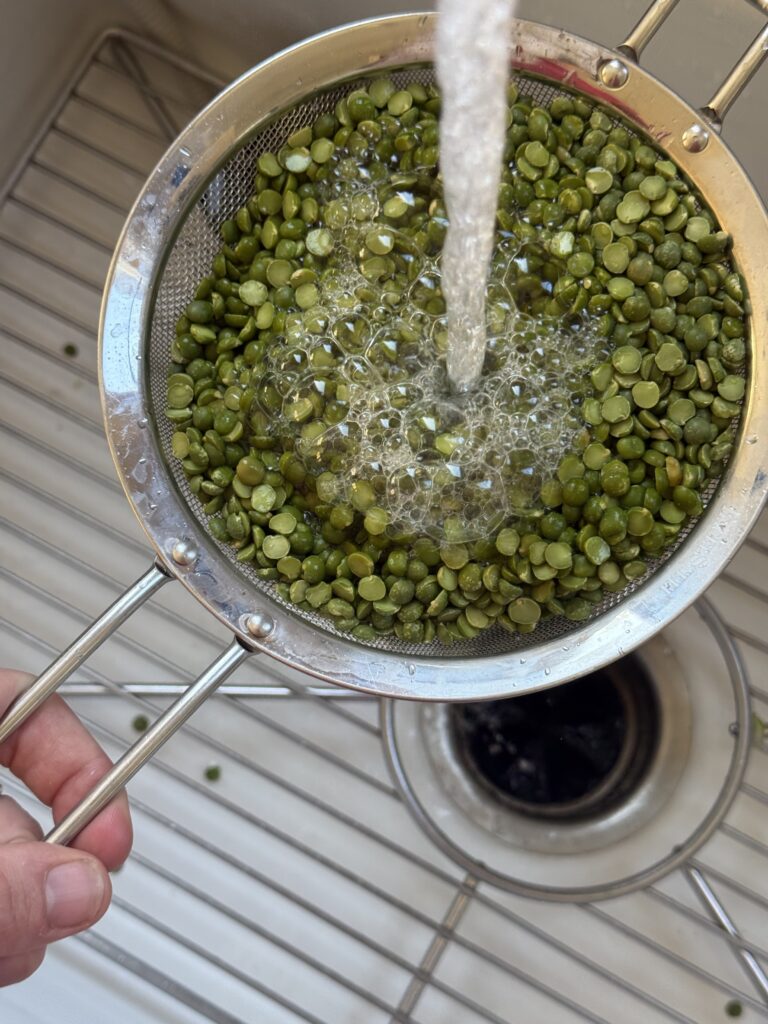
Green split peas. No soaking required. Just rinse them and pick through for any small stones or debris, which is rare but worth the 30 seconds. Look for evenly colored, unbroken peas at the store. They keep for over a year in the pantry, so stock up.
Carrots. If you’re growing them, this is a perfect use for those late-season or slightly oversized garden carrots that aren’t pretty enough for a crudité plate but still taste sweet and earthy. Any standard orange carrot works here. In Zone 10b, fall- and winter-sown carrots are often at their sweetest around the time you’re making this soup. Peel them, but don’t stress about precision when slicing. They soften completely.
Russet potato. One medium, skin on, diced. The skin breaks down and is unnoticeable in the final soup. Russets are the right choice here because of their high starch content. They disintegrate during the long simmer, which is exactly what you want.
Fresh thyme. Four sprigs. If you grow thyme, snip from the garden. Otherwise, a standard pack from the produce section works. You’ll remove the stems at the end.
Ham bone. The star. You want a leftover bone from a holiday ham (spiral-cut works great) with some meat still clinging to it. You’ll pull that meat off later and stir it back in. If you don’t have a leftover bone, a smoked ham hock from the butcher counter works, though it’s a different cut with less meat and more connective tissue. Either way, the smoke and collagen are what matter. See the Tips section for more on this swap.
How to Make Split Pea Soup with Leftover Ham Bone
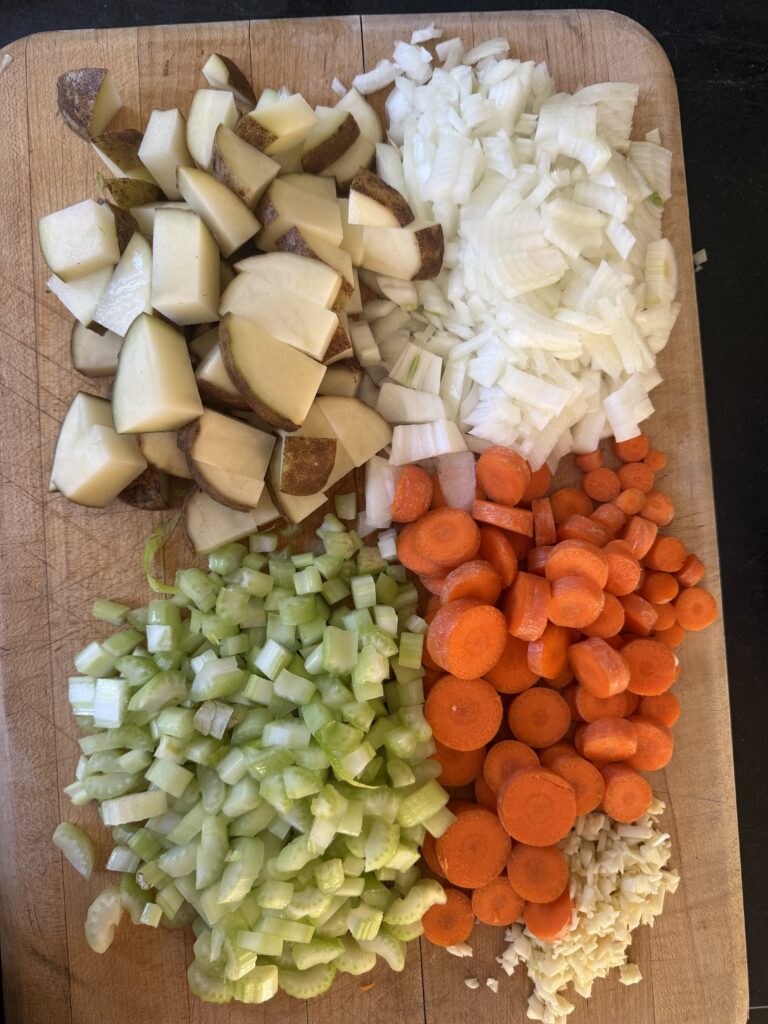
1. Warm 2 tablespoons of olive oil in a large Dutch oven or heavy-bottomed pot (at least 7 quarts) over medium heat. Add the diced onion, sliced carrots, and diced celery along with a small pinch of salt and a few grinds of pepper. Cook, stirring occasionally, until the onion turns translucent and the carrots have softened slightly and lost their raw edge, about 7 to 8 minutes. Add the minced garlic and cook until fragrant and just beginning to turn golden at the edges, about 1 minute more.
2. Add the rinsed split peas, ham bone, diced potato, bay leaves, and thyme sprigs to the pot. Pour in 8 cups of chicken broth. The liquid should cover the bone by about an inch; if it doesn’t, add a little more broth. Bring everything to a gentle boil over medium-high heat, then reduce the heat to low and partially cover the pot. Simmer, stirring every 20 minutes or so to prevent the peas from sticking to the bottom, until the peas have completely broken down into a thick, creamy base and the kitchen smells deeply smoky and savory, about 1½ to 2 hours. The soup will thicken as it cooks. If it starts to look too thick before the peas are fully dissolved, add a splash of broth.
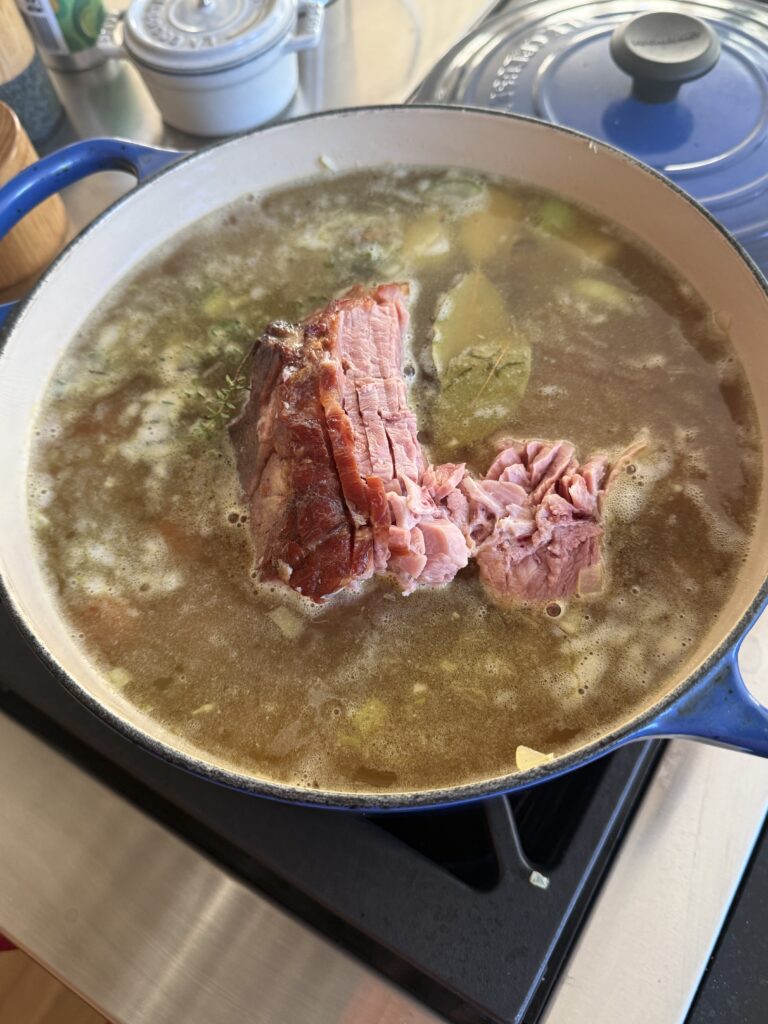
3. Use tongs to lift the ham bone onto a cutting board and let it rest until cool enough to handle, about 10 minutes. Pull the meat from the bone in bite-sized shreds, discarding the bone, any large pockets of fat, and gristle. Return the shredded meat to the pot. Fish out and discard the bay leaves and thyme stems.
Subscribe
Join The Community Garden
More than a newsletter, this is the deeper story behind the seasons. Think exclusive recipes, urban gardening tips, personal updates, and the slow-living inspiration I don’t share anywhere else. Join Carmen In The Garden on Substack and dig in.

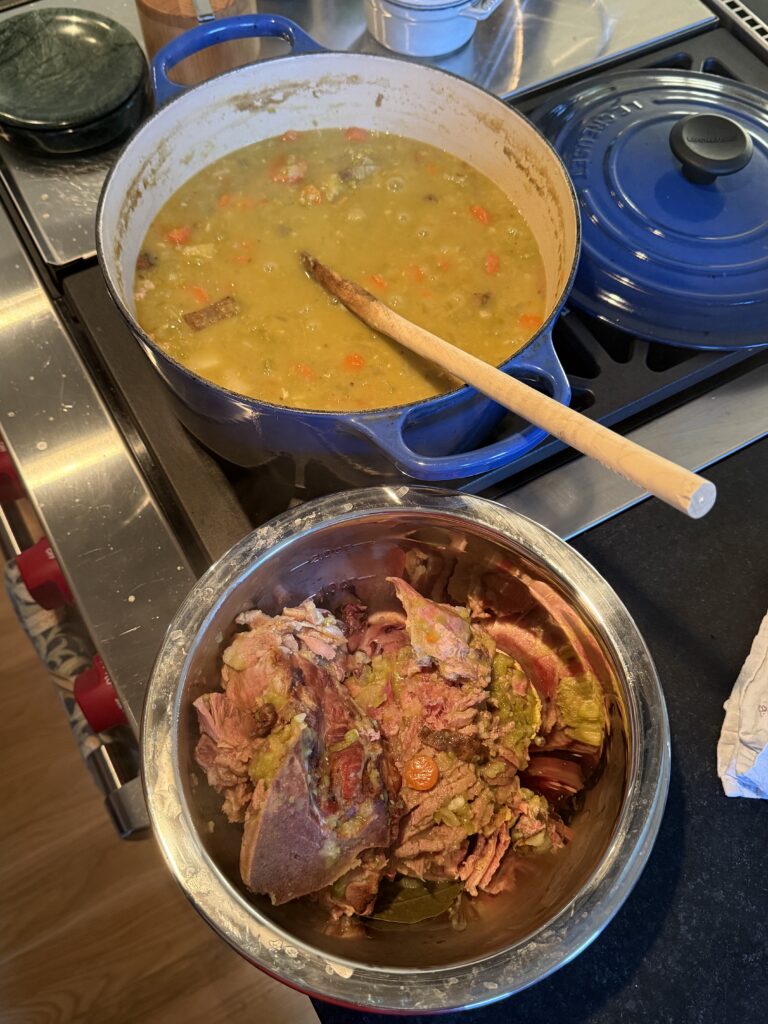
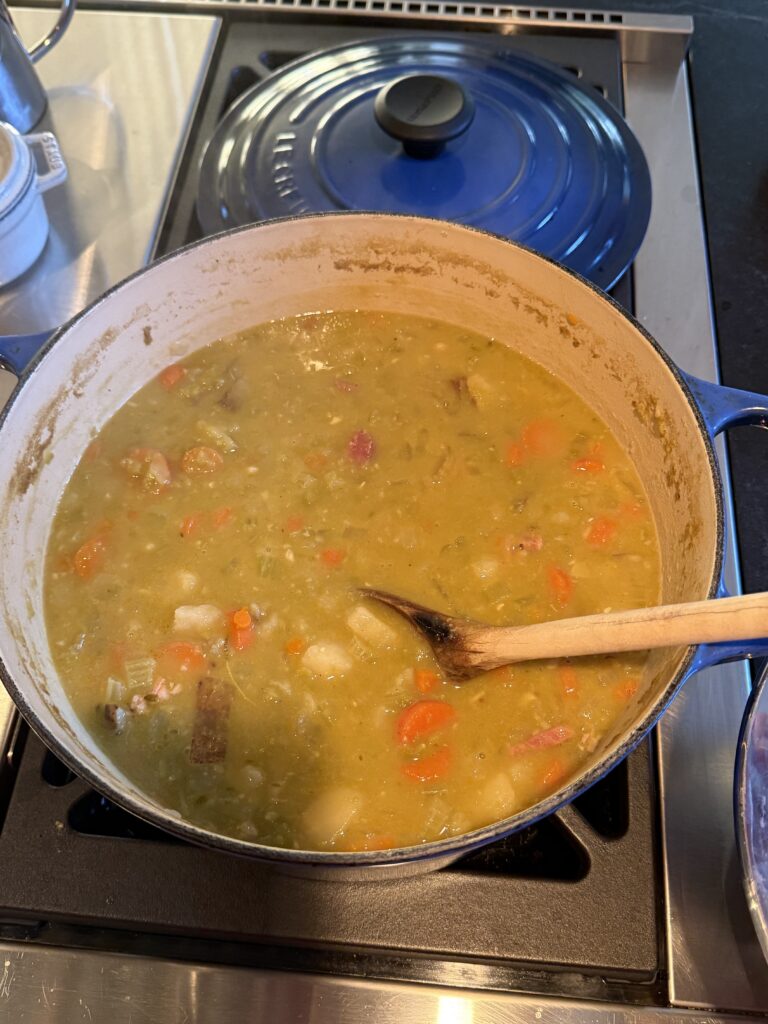
4. Stir in 1 teaspoon of apple cider vinegar. Now taste the soup before reaching for the salt. The ham bone will have released a significant amount of salt into the broth during the simmer, and you may not need much, if any, additional salt. Adjust with pepper as needed. If the soup is thicker than you’d like, loosen it with a splash of broth.
5. Ladle into warm bowls and serve with crusty bread for tearing and dipping.
Tips, Swaps, and Testing Notes
On salt: go easy. This is the single most important thing to know about this recipe. The ham bone releases a lot of salt into the broth as it simmers. I add only a small pinch during the mirepoix step and nothing else until the very end. Taste first, then adjust. You can always add salt. You can’t take it out.
Ham hock swap. If you don’t have a leftover ham bone, a smoked ham hock (about 1 to 1½ pounds) works. Expect less shredded meat at the end and a slightly more gelatinous broth, which is not a bad thing. The flavor will be deeply smoky either way. You may need to simmer a ham hock slightly longer since the connective tissue is denser.
On the liquid. Eight cups of broth was enough to cover the bone in my Dutch oven. If your bone is especially large and isn’t submerged, add a little more broth. The peas absorb a lot of liquid as they cook, so don’t be alarmed if the soup thickens considerably.
Thyme tip. After 2 hours of simmering, the thyme leaves will have fallen off the stems. The stems are easier to find if you tie them together with kitchen twine or tuck them into a cheesecloth bundle before adding them. Not essential, but it makes fishing them out less tedious.
Storage. Split pea soup thickens dramatically once refrigerated. This is normal. When reheating, add a splash of water or broth and stir over medium-low heat until it loosens to your preferred consistency. The soup keeps well in the fridge for 4 to 5 days and freezes beautifully for up to 3 months.
Leftovers improve. This soup is arguably better on day two. The flavors concentrate and meld overnight. Make the full batch even if you’re cooking for two.
Serving Suggestions
This soup wants crusty bread, full stop. A sourdough boule or a sturdy baguette, torn rather than sliced, for dragging through the bowl. A simple green salad with a sharp vinaigrette (something with Dijon and shallot) cuts through the richness nicely if you want a full meal. A few drops of good olive oil drizzled on top and a crack of black pepper are all the garnish it needs.
Frequently Asked Questions
Do I need to soak split peas before making this soup?
No. Green split peas do not require soaking. A quick rinse and a scan for any small stones is all the prep they need. They break down completely during the long simmer.
Can I make this without a ham bone?
A smoked ham hock from the butcher counter is the best substitute. You’ll get the same smoky depth, though with less shredded meat at the end. For a fully pork-free version, you’d need a different recipe entirely, as the ham bone is the foundation of the flavor here.
Why is my soup so thick after refrigerating?
Totally normal. Split peas and the dissolved potato starch set up like a thick porridge when cold. Add a splash of broth or water when reheating and stir over medium-low heat. It will loosen right back up.
Can I use a slow cooker?
You can. Brown the mirepoix on the stovetop first for better flavor, then transfer everything to the slow cooker. Cook on low for 7 to 8 hours or high for 4 to 5 hours. The texture will be slightly looser than the stovetop version.
Can I use yellow split peas instead of green?
Yes. Yellow split peas have a slightly milder, sweeter flavor and will produce a lighter-colored soup. The texture and cook time are the same.
Print Split Pea Soup with Leftover Ham Bone
| Prep: 15m | Cook: 2h | Total: 2h 15m |
A thick, deeply savory split pea soup built on a leftover ham bone. The peas collapse into a velvety base, a russet potato melts in for body, and a hit of apple cider vinegar pulls everything into focus.
Ingredients
- 2 tablespoons extra-virgin olive oil
- 1 large yellow onion, diced (about 1½ cups)
- 3 medium carrots, peeled and sliced into ½-inch rounds (about 1 cup)
- 3 celery stalks, diced (about 1 cup)
- 4 garlic cloves, minced
- 1 pound (about 2¼ cups) dried green split peas, rinsed and picked over
- 1 leftover ham bone with meat still attached, or 1 smoked ham hock (1 to 1½ pounds)
- 1 medium russet potato, skin on, diced into ½-inch pieces
- 2 bay leaves
- 4 fresh thyme sprigs
- 8 cups (64 oz) low-sodium chicken broth, plus more as needed
- Kosher salt, to taste (see note)
- Freshly ground black pepper
- 1 teaspoon apple cider vinegar
- Crusty bread, for serving
Instructions
- Warm the olive oil in a large Dutch oven (at least 7 quarts) over medium heat. Add the onion, carrots, and celery with a small pinch of salt and a few grinds of pepper. Cook, stirring occasionally, until the onion is translucent and the carrots have softened slightly, about 7 to 8 minutes. Add the garlic and cook until fragrant and barely golden, about 1 minute.
- Add the split peas, ham bone, potato, bay leaves, and thyme. Pour in the broth. The liquid should cover the bone by about an inch; add a little more broth if needed. Bring to a gentle boil, then reduce to low, partially cover, and simmer, stirring every 20 minutes, until the peas have completely broken down and the soup is thick and creamy, 1½ to 2 hours.
- Transfer the ham bone to a cutting board and let cool about 10 minutes. Shred the meat into bite-sized pieces, discarding bone, fat, and gristle. Return meat to pot. Remove bay leaves and thyme stems.
- Stir in the apple cider vinegar. Taste before adding salt, as the ham bone contributes significant salt. Adjust seasoning as needed. Thin with broth if desired.
- Ladle into bowls and serve with crusty bread.
Notes
Salt: A small pinch goes in with the mirepoix to help the vegetables release their moisture, but that’s it. The ham bone releases a lot of salt during the long simmer. Taste the finished soup before adding any more. You may need very little, if any, additional salt.
Storage: Refrigerate up to 5 days. Freeze up to 3 months. The soup thickens when chilled; add liquid when reheating.
Ham hock swap: A smoked ham hock (1 to 1½ pounds) works if you don’t have a leftover ham bone. Expect less shredded meat and a slightly more gelatinous broth.


Rate & Review