Ingredients
- 3 pounds beef bones (a mix of knuckle, neck, oxtail, or shank, variety is key)
- 1 pound bone marrow cuts (about 4 pieces, crosscut into 3-inch sections)
- 6 oil-packed anchovy fillets (one 2-ounce tin)
- 1 tablespoon anchovy oil from the tin
- 1 large yellow onion, peeled and quartered
- 1 whole head of garlic, halved crosswise, skins left on
- 2 tablespoons apple cider vinegar
- 16 cups cold water, enough to cover bones by 2 inches
Instructions
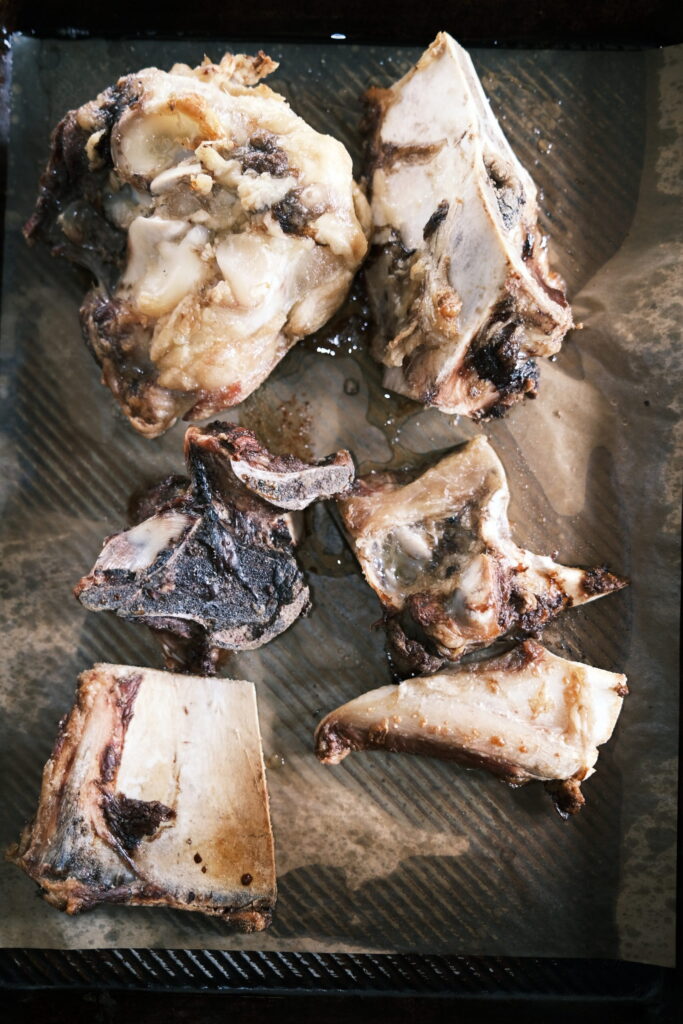
- Preheat your oven to 425°F. Arrange the beef bones, onion, and garlic on a parchment-lined rimmed sheet pan in a single layer, don’t crowd them. Roast for 35–40 minutes, until the bones are deep golden brown with dark caramelized edges. You want real color here, pale bones make pale broth.
While the bones roast, mash the anchovy fillets with the back of a fork until you have a rough paste. Stir in the tablespoon of anchovy oil to loosen it. You want a spreadable consistency, like a chunky vinaigrette.
Pull the bones from the oven and reduce the temperature to 400°F. Using the back of a spoon or your hands, rub the anchovy paste all over the bones, getting it into every crevice and joint. It doesn’t need to be perfect, just a thin, uneven coating. Add the marrow cuts to the pan now and give them a light rub of anchovy paste too. Return everything to the oven and roast for another 15–20 minutes. You’re looking for the anchovy to darken and form a sticky, almost lacquered coating on the bones. The onions should be charred at the edges and soft.
Transfer the roasted bones, marrow cuts, onions, garlic, and every bit of rendered fat and caramelized fond from the sheet pan into a large stockpot (7 quarts or larger). Pour a splash of hot water onto the sheet pan and scrape up all the dark sticky bits with a wooden spoon, this is liquid gold. Pour that into the pot too. Add the apple cider vinegar and the cold water. The water should cover the bones by about 2 inches. If it doesn’t, add more.
Set the pot over medium-high heat and bring to a bare simmer. You want lazy bubbles breaking the surface, never a rolling boil. This will take 30–45 minutes. As it heats, a raft of gray-brown foam and scum will rise to the surface. Skim this off with a ladle or large spoon every 15 minutes or so for the first hour. Don’t stress about getting every last bit, but removing the bulk keeps your broth clean and clear.
Once you’ve skimmed the initial foam, reduce the heat to the lowest setting your stove will hold. You want the surface barely trembling with a bubble rising every few seconds. Leave the pot uncovered and let it go for 10–14 hours total, checking occasionally to make sure the liquid stays above the bones. If it reduces too much, add a cup of hot water. The broth will slowly turn from pale gold to deep amber.
Set a fine-mesh strainer over a large bowl or clean pot. Discard the spent bones and vegetables. Let the broth cool for 15-20 minutes, then ladle into clean, 32 ounce deli containers or quart mason jars. Cover and refrigerate until fully chilled.
The next morning, check your broth. It should be jiggly like set Jell-O, that’s pure gelatin, and it means you nailed it. A thick cap of golden fat will have solidified on top. You can lift this off in one piece and save it for roasting vegetables (it’s incredible), or leave it on as a natural seal if you’re storing the broth. Season with flaky sea salt or Kosher salt only when you’re ready to use it, unseasoned broth is more versatile.